

The present building consists mainly of a large, early seventeenth century manor house with Victorian extensions. The house probably exemplified the three-unit, submedieval plan consisting on the ground floor of a hall between an inner and outer unit. The hall was heated by a fireplace which still survives. The lateral chimney is uncommon in Montgomeryshire but a small group has already been noted at this western end of the county. The thick stone walls are probably original as are a number of ogee-stopped plain chamfered beams, the ogee-stopped fireplace bressummer, as well as three plain collar-beam roof trusses.
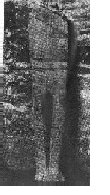 The present staircase is Victorian but a fragment of a pierced stair baluster, presumably from the original staircase, was found buried in a wall nearby and is now kept loose in the residents lounge.
The accepted meaning of Dolguog is "Cuog's Meadow". Cuawg was one of the sons of Cyndrwyn Prince of part-Powys. It is said that the well-known Welsh poet of the sixth century, Llywarch Hen, recieved the hospitality of Cuog and his brother Cynddylan who owned possessions in the neighbourhood. It would appear that the River Dulas was then called Cuog and one of Llywarch Hen's poems was an address of thirty two stanzas 'To the Cuckoo in Abercuawg'. Llywarch Hen wrote many poems on the battles and adventures of Cyndrwyn and his sons Cuog and Cynddylan. The names of both sons appear in the following verse from the poem 'Triplets of the Rooms'
Cynddylan's room it is deserted tonight
After the pleasures of the warriors Elvan, Cynddylan and Caeog.
The present building was built by the Herbert family and it seems likely that the plaque on the front wall above the main doorway, dated 1632, relates to a major buildng works. The 'H' refers to the name Herbert and 'FA' to the christian names of Francis and his second wife Abigail.
The Herberts of Montgomery were direct descendents from the Earls of Pembroke and the Lords of Raglan. It appears that Matthew Herbert was the first Herbert to live at Dolguog. His great uncle William, he first earl of Pembroke, was one of the influential members of the King's Council of State on the accession of Edward IV. William held numerous offices which, in effect, gave in supreme control over the south and parts of North Wales. He was eventually granted the stewardship of castles, lordships and manors in Carmarthen, Cardigan, Brecknock, Pembroke and Merioneth.
Matthew Herbert's brother was Richard Herbert of Mongomery Castle who was father to the famous poet George Herbert (1593-1633) and the famous philosopher, historian and diplomatist Edward. Lord of Chirbury (1583-1648). Matthew Herbert's father, Edward Herbert of Montgomery, was sheriff of Montgomeryshire in 1557 and 1568.
Richard Williams FRHS said of the Herberts in a lecture delivered at the Welsh National Society on November 26th 1889.
'Few, if any, of our Welsh families have produced so great a number of illustrious characters as the Herbert family. For five centuries or more its members have acted a conspicuous and important part in the history, not only of Wales, but also of the British Empire as warriors, diplomatists, poets, scholars and divines.'
Matthew Herbert was called to the bar as a member of the Inner Temple in 1582. According to his nephew, Lord Herbert of Chirbury:
'He went to the Low Country Wars and after sometime spent there came home and lived in the country at Dolguog upon a house and fair living which my Grandfather Edward Herbert bestowed upon him. He was a member of Parliament with George Herbert Esquire for the county of Monmouth in the fifth year of Queen Elizabeth fair living which my Grandfather Edward Herbert bestowed upon him. He was a member of Parliament with George Herbert Esquire for the county of Monmouth in the fifth year of Queen Elizabeth's reign and with his father's first cousin, Oliver Lloyd of Leighton, for Montgomery in the Parliament that met at Westminster 29th October 1586.'
Matthew was left Dolguog in his father Edward's will dated March 24th 1592 and proved on June 8th 1594 together with considerable property and lands in the area. he married Anne, daughter of Charles Fox of Bromfield in the County of Salop.
A copy of a letter survives from Matthew Herbert's period at Dolguog which reveals how important news was conveyed from one town to another. Matthew Herbert of Dolguog, Morris Owen of Rhiwsaeson and John Owen of Machynlleth signed a letter dated 25th February 1606 to James Price, Hughe Owen and Edneved Griffith of Towyn reporting that the Spaniards had allegedly landed at Chester.
RELATED VIDEO


RELATED FACTS
-
Hywel Swrdwal (fl. 1430-1475) was a Welsh language poet from Machynlleth, Powys.
Hywel composed poems on themes of patriotism and religion.
Hywel was the father of two sons, Ieuan ap Hywel Swrdwal and Dafydd ap Hywel Swrdwal. -
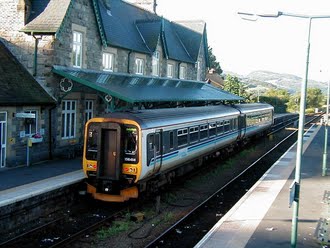 Machynlleth railway station is a railway station on the Cambrian Line in mid-Wales, serving the historic town of Machynlleth. It was built by the Newtown and Machynlleth Railway (N), and subsequently passed into the ownership of the Cambrian Railways, the Great...
Share this Post
latest posts
-
 Arts Wales October 8, 2026
 -
 Cheap weekend breaks Wales September 18, 2026
 -
 Holiday spots in UK August 29, 2026
 -
 Visit South Wales August 9, 2026
 -
 South Wales attractions July 20, 2026
 -
 Mid Wales Hotels June 30, 2026
 -
 Tourist destinations in Wales June 10, 2026
 -
 Wales Machynlleth May 21, 2026
 -
 Wales best places to visit April 21, 2026
popular posts
-
 Top Ten places to visit in Wales November 30, 2015
 -
 Places to stay in Brecon December 18, 2016
 -
 West Wales tourist attractions November 12, 2016